
Trieste – A Bridge Connecting the Economies of the Western Balkans and the Alpine-Adriatic Region
Aug 24, 2026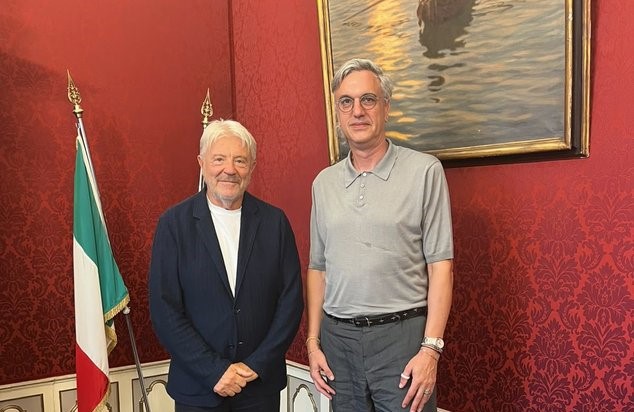
Marko Čadež, President of the Chamber of Commerce and Industry of Serbia (CCIS), met today in Trieste with Antonio Paoletti, President of the Chamber of Commerce of Venezia Giulia – Trieste-Gorizia, and Franco Dal Mas, Secretary General of the Central European Initiative (CEI), to discuss stronger institutional and business ties between the economies of the Western Balkans and the Alpine-Adriatic region, as well as strengthening chamber and intergovernmental initiatives aimed at developing key transport corridors. David Piegački, Secretary General of the Western Balkans Chamber Investment Forum (WB6 CIF), also attended the meetings.
Čadež proposed to Paoletti that Trieste host meetings of businesspeople, investors and chamber leaders from the Western Balkans and the Alpine-Adriatic region twice a year, serving as a permanent platform for connecting companies, developing supply chains, presenting investment projects and launching joint initiatives.
The two chamber networks connected through this initiative represent approximately 1.2 million companies. The WB6 CIF brings together around 350,000 businesses from the six Western Balkan economies, while the Alpine-Adriatic network represents nearly 850,000 companies from Italy, Austria, Slovenia and Croatia. The aim is to connect this large business base through concrete projects and new partnerships.
“Trieste is a natural place for such an initiative. It is home to the WB6 CIF headquarters, the Chamber of Commerce of Venezia Giulia is one of the active stakeholders in the Alpine-Adriatic network, and the city itself represents an important economic, logistics and historical link between the Western Balkans, Central Europe and the Mediterranean,” Čadež said.
Future meetings in Trieste should focus on concrete results, business-to-business meetings, joint investment projects, transport and logistics, the energy and green transition, digitalisation, innovation, access to finance and stronger integration of Western Balkan companies into European value chains.
At the meeting with CEI Secretary General Franco Dal Mas, particular attention was devoted to linking this intergovernmental platform with the WB6 CIF and creating a joint business and transport agenda.
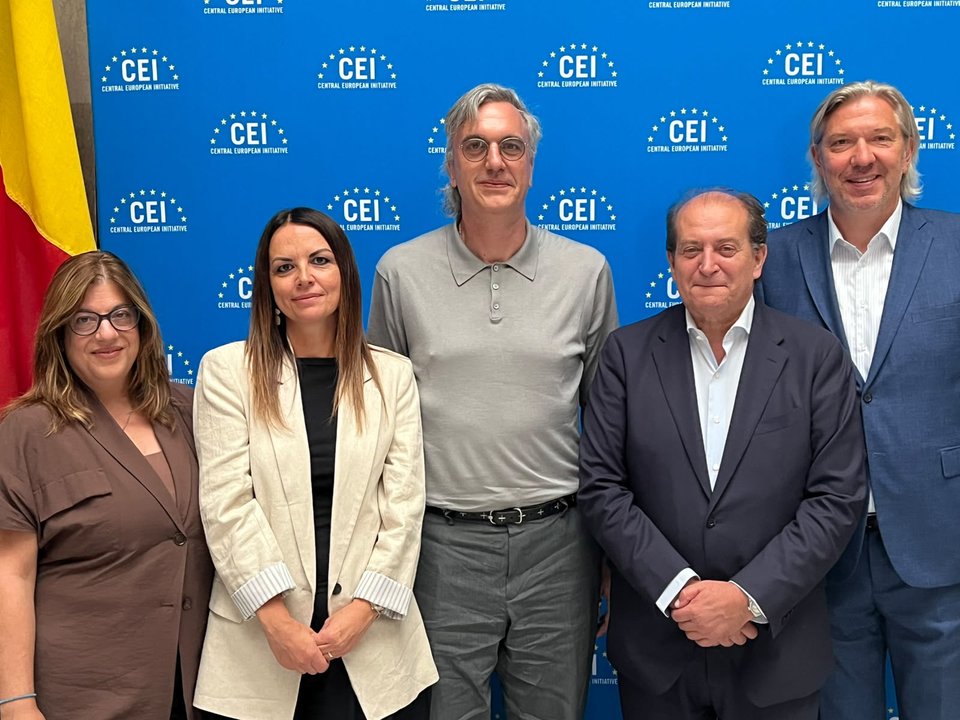
“The CEI can bring together governments and European institutions, while the WB6 CIF represents around 350,000 companies and their real needs. It is precisely this connection between political decisions, infrastructure projects and the demands of businesses that can deliver results that companies will feel immediately,” Čadež stressed.
The modernisation of the Trieste–Ljubljana–Zagreb–Belgrade railway corridor and its connection with the Northern Adriatic ports, Skopje and Thessaloniki was at the centre of the discussions, with the aim of creating a fast, green and reliable land bridge linking the Adriatic, the Western Balkans, Central Europe and the Eastern Mediterranean.
Regional initiatives within the framework of the Interreg IPA ADRION programme offer particular potential. Joint efforts by the CEI and the WB6 CIF chambers should focus on modernising railway infrastructure and the Šid–Tovarnik border crossing, improving connections between railways, intermodal terminals and the ports of Trieste, Koper and Rijeka, as well as expanding green corridors, enabling digital data exchange and ensuring round-the-clock operation of inspection services.
The interlocutors also agreed that priorities include the mutual recognition of controls and the development of integrated border crossings, as well as a joint initiative towards the European Commission for a sustainable solution to the 90/180-day rule for professional drivers from the Western Balkans.
Around 26 million working hours of drivers are lost every year at Western Balkan border crossings, equivalent to almost 3,000 years of waiting time. For companies, however, logistics is simple – goods need to arrive quickly, reliably and at a predictable cost.
For this reason, the CEI and the WB6 CIF will work on establishing a joint business and transport agenda based on data from companies, precisely identified bottlenecks and joint projects to be submitted to European funds and institutions.
“Corridors are not just railways, roads and ports. They are infrastructure for economic growth, new investment and the faster integration of the Western Balkans into the European single market,” Čadež said.
LATEST NEWS
