
Third Belgrade Hydrogen Conference: Serbia Accelerates Its Path Toward a Green Energy Transition
Mar 19, 2026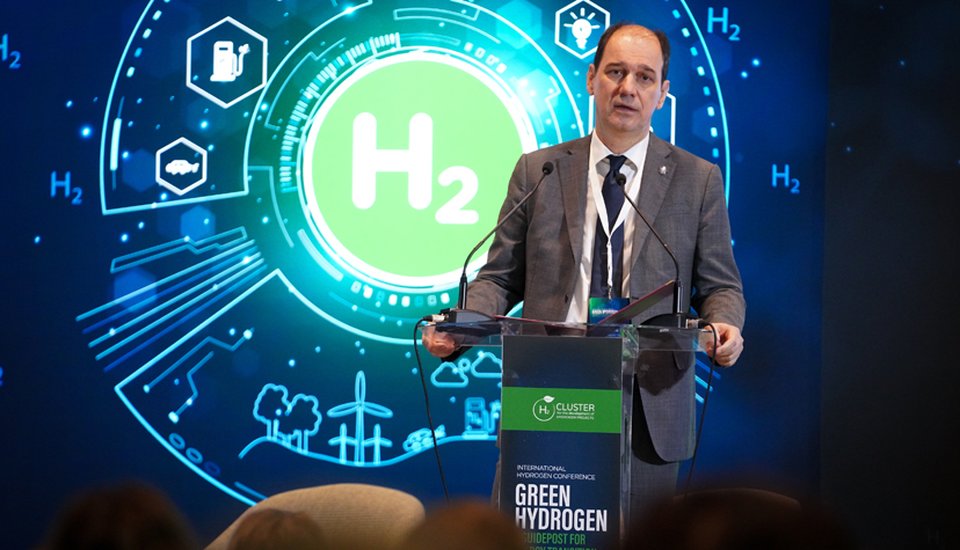
Hydrogen is a strategic resource of the future and one of the key pillars of the global energy transition. Serbia must rapidly and systematically develop its hydrogen economy as a crucial instrument for energy transition, decarbonisation, and strengthening energy security. Strong cooperation among the government, industry, and academia, accelerated development of the regulatory framework, as well as increased investments, innovation, and international support are essential for this process, it was emphasized at the Third Belgrade Hydrogen Conference, which opened at the Hyatt Hotel and gathered representatives of state institutions, businesses, academia, and international partners.
Vice President of the Serbian Chamber of Commerce (CCIS), Mihailo Vesović, highlighted the important role of the Chamber in connecting businesses, academia, and institutions in the development of the hydrogen economy. He recalled that the Chamber, in cooperation with relevant faculties, participated in drafting Serbia’s hydrogen development strategy. He identified production, demand, and infrastructure as key development elements, emphasizing that the entire process must be market-oriented. He also pointed to the importance of adopting a national strategy, as well as the contribution of the hydrogen cluster that brings together all relevant stakeholders in this process.
Minister of Mining and Energy Dubravka Đedović Handanović pointed out that hydrogen is taking an increasingly important place in Serbia’s energy transition process, particularly in the context of global challenges and the energy crisis the world has faced since 2022. She stressed the necessity of reducing dependence on fossil fuels, despite the complexity of that process, and underlined hydrogen’s important role in decarbonisation, especially in sectors such as transport.
She particularly highlighted activities aimed at improving the legislative framework, including amendments to the Energy Law adopted in December 2024, as well as work on the hydrogen development programme covering production, transport, and storage. Attention was also drawn to the importance of pilot projects, including the demonstration plant in Vinča implemented with the support of the European Union, as well as the need for further development of renewable energy sources and investments in education and science.
Dean of the Faculty of Mechanical Engineering at the University of Belgrade, Prof. Dr Vladimir Popović, emphasized that the hydrogen cluster actively contributes to the development of this sector by connecting key stakeholders, supporting infrastructure development, providing education, and participating in the drafting of strategic documents. He pointed to the significant potential of green hydrogen in reducing carbon dioxide emissions and decreasing the use of fossil fuels.
British Ambassador to Serbia Edward Ferguson stressed that the transition toward a clean economy is inevitable, with hydrogen being one of the central elements of that process. He highlighted Serbia’s importance as a partner in the development of renewable energy sources and decarbonisation, as well as the potential for strengthening regional cooperation and attracting investments.
German Ambassador to Serbia Anke Konrad emphasized that hydrogen can play a central role in the transition toward alternative fuels while strengthening energy security, adding that Germany strongly supports Serbia’s green transformation. She particularly highlighted the energy potential of Serbia and the Western Balkans region.
Ambassador of the Kingdom of Denmark Pernille Dahler Kardel pointed to the advanced development of hydrogen technologies in Denmark and the importance of setting ambitious goals in the field of green hydrogen, recalling the large number of projects that Denmark is implementing worldwide.
EU Ambassador and Head of the Delegation of the European Union to Serbia Andreas von Beckerath assessed that the conference is taking place at the right moment, given the rapid changes in the energy sector. He highlighted the key role of green hydrogen in strengthening energy independence, especially in industries such as chemicals and transport, as well as the European Union’s plan to produce 10 million tonnes of hydrogen by 2030. He also emphasized the importance of the CBAM mechanism, stressing that hydrogen represents a strategic tool for Serbia’s long-term economic transformation.
The Third Belgrade Hydrogen Conference once again confirmed that the development of the hydrogen economy requires synergy between the state, industry, and academia, as well as strong international cooperation, in order for Serbia to successfully respond to the challenges of the energy transition and make full use of the potential offered by this technology.
Photo: Tanjug / Jadranka Ilić
LATEST NEWS
