
Flexibility Is the Answer to the New Reality: Čadež at GLOBSEC 2026 on the Future of Global Trade and the AI Economy
May 22, 2026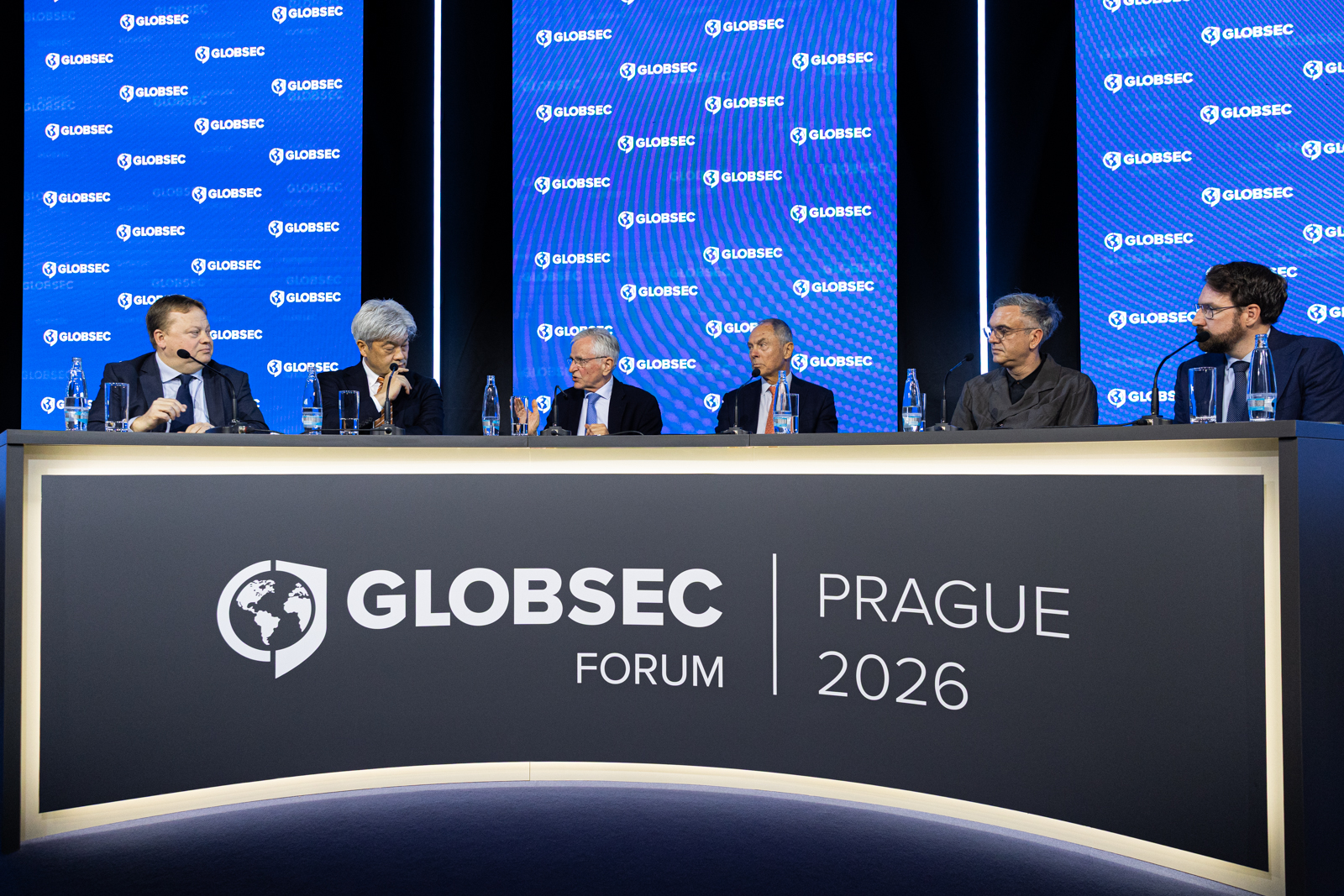
Openness, rapid adaptation, and flexibility are key responses to profound changes in the global economy and the only way for countries and companies to remain competitive in a world that is changing faster than ever before, said Marko Čadež, President of the Chamber of Commerce and Industry of Serbia, at the “GLOBSEC 2026” forum in Prague.
Čadež participated in the panel discussion “Global Trade in the World of ‘Trumponomics’,” dedicated to the new dynamics of global trade, the rise of protectionism, the weakening of the multilateral system, and the transformation of the global economic order following Donald Trump’s return to the White House. The panel also featured Jan Švejnar and Richard Gardner, professors at the School of International and Public Affairs at Columbia University, Wilhelm Molterer, Chairman of the GLOBSEC Board and former Vice Chancellor and Minister of Finance of Austria, Kazuto Suzuki, Director and Group Leader at The Institute of Geoeconomics, and Fabian Zuleeg, Chief Executive and Chief Economist at the European Policy Centre. The discussion was moderated by Dave Keating, journalist and presenter at France24.
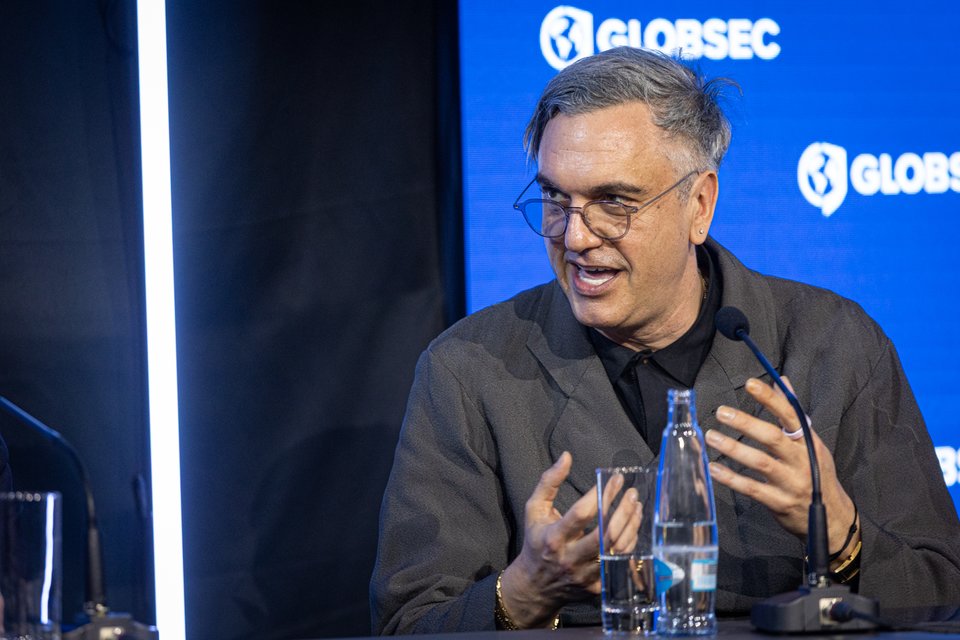
Panel participants discussed the future of the World Trade Organization (WTO), growing trade tensions, the redefinition of global alliances, and the need for the global trading system to adapt to new geopolitical and technological realities.
Čadež, who represented Serbia’s business community and the business association bringing together more than 170,000 companies, emphasized that Serbia, thanks to its experience in dealing with numerous crises and challenges, is now an example of a country capable of rapidly adapting to global changes and successfully balancing between different economic and political centers.
“Serbia is an interesting example of a country that has investments from China, exports more than 60 percent of its goods to the European Union and receives significant investments from the EU, while at the same time developing cooperation with new markets, primarily in the Global South and Africa,” Čadež said.
He stressed that one of today’s key issues is linking global trade with the technological revolution driven by artificial intelligence.
“We no longer live in the world in which the existing trade agreements were created. We live in a world of tokens, in a world where it will be crucial to determine who has the energy and infrastructure required to produce intelligence. The question is whether we will have intelligence factories that will create the future economy and future value,” the President of the Chamber said.
“At this moment, we have NVIDIA projects worth 800 million dollars in AI factories, while at the same time a Chinese humanoid robot factory – the first on the European continent – is being developed and will be completed within two months. Such robot factories currently exist only in the United States and China,” Čadež stated.
He highlighted that the speed of investment implementation is one of Serbia’s greatest competitive advantages.
“In Serbia, permits are obtained ten times faster than in the European Union. If you want to build a smart economy based on artificial intelligence, you cannot spend seven years building a factory – the job has to be completed within a year,” Čadež said.
The President of the Chamber also reminded participants that, thanks to its free trade agreements, Serbia has access to a market of 2.7 billion consumers, representing a significant advantage at a time of growing global market fragmentation.
Speaking about Europe’s position in the new geoeconomic environment, Čadež assessed that the European Union must define more clearly its relationship with China, as well as its own industrial strategy.
“Our strategic orientation remains Europe, but we must understand the new global order and the place we want to have in it. Europe will never be China or the United States, but it must find a way to function in a world between these two powers,” Čadež said.
He also pointed to a lack of communication between European institutions and the business community, citing the example of the most advanced Stellantis factory in Europe, located in Serbia and producing electric vehicles, which cannot participate in European Union public procurement procedures and tenders due to regulatory limitations.
“We need a serious discussion about European industrial policy. I have never seen an administration so disconnected from its own economy as is currently the case in the European Union,” Čadež stated.
He concluded that security, defense, unity, and long-term strategy are issues Europe must urgently and seriously address in a time of global disruption and uncertainty.
Panel participants viewed a multilateral approach and new partnerships with regions and countries such as Africa, India, and Canada as a possible solution for Europe’s current position between China and the United States.
PHOTO: GLOBSEC
LATEST NEWS
