
Čadež and Laminger Discuss the Potential Application of Germany’s SME Financing Model in Serbia
Nov 19, 2026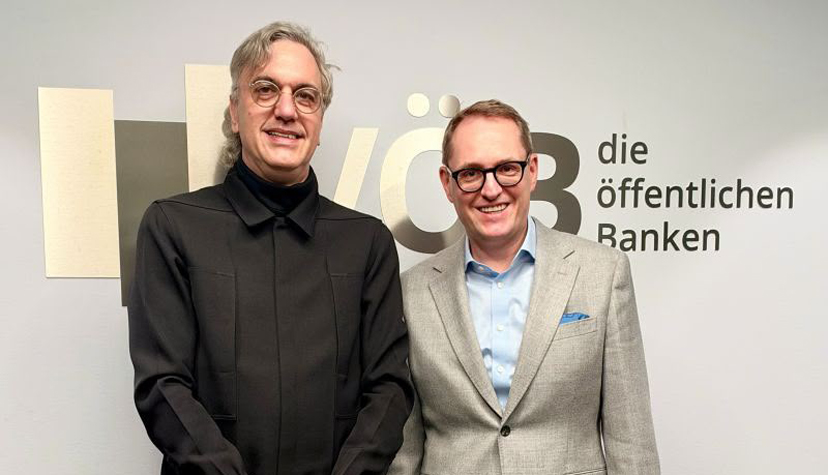
President of the Serbian Chamber of Commerce (SCC), Marko Čadež, met with Dominik Laminger, a member of the Executive Board of the German Association of Public Banks (VÖB), to discuss the German model of cooperation between commercial and development banks and the possibility of applying it in Serbia.
This model can facilitate access to investment loans for small and medium-sized enterprises (SMEs) that have orders and the capacity to expand production but lack sufficient assets to offer as collateral.
Čadež noted that Germany’s development banking system represents an example of good practice in Europe. He particularly highlighted the principle of the house bank (Hausbank), which allows businesses to access support from development banks through the commercial bank they already work with.
The commercial bank where a company holds its account assesses its ability to repay the loan and submits an application to the development bank. Through its programmes, the development bank provides funding for investments and may also assume part of the credit risk. For example, under a programme offered by the regional development bank NRW.BANK, a manufacturer purchasing equipment worth, for instance, EUR 500,000 can finance the entire purchase through its commercial bank, provided it meets the programme requirements.
The development bank may assume half of the credit risk, while the company remains responsible for repaying the full loan amount, including interest.
Following the meeting, Laminger stressed that development banks attract private capital, thereby increasing the impact of public funds. Such support, he explained, enables companies to launch business operations, invest in innovation and carry out investments that they would otherwise postpone or implement on a smaller scale.
Čadež thanked Laminger for VÖB’s willingness to share the experience of German development banks with businesses and institutions in Serbia and invited him to visit Belgrade.
LATEST NEWS
