
Čadež: Chamber of Commerce of Serbia Launches Initiative for National e-Mobility Strategy
Feb 25, 2026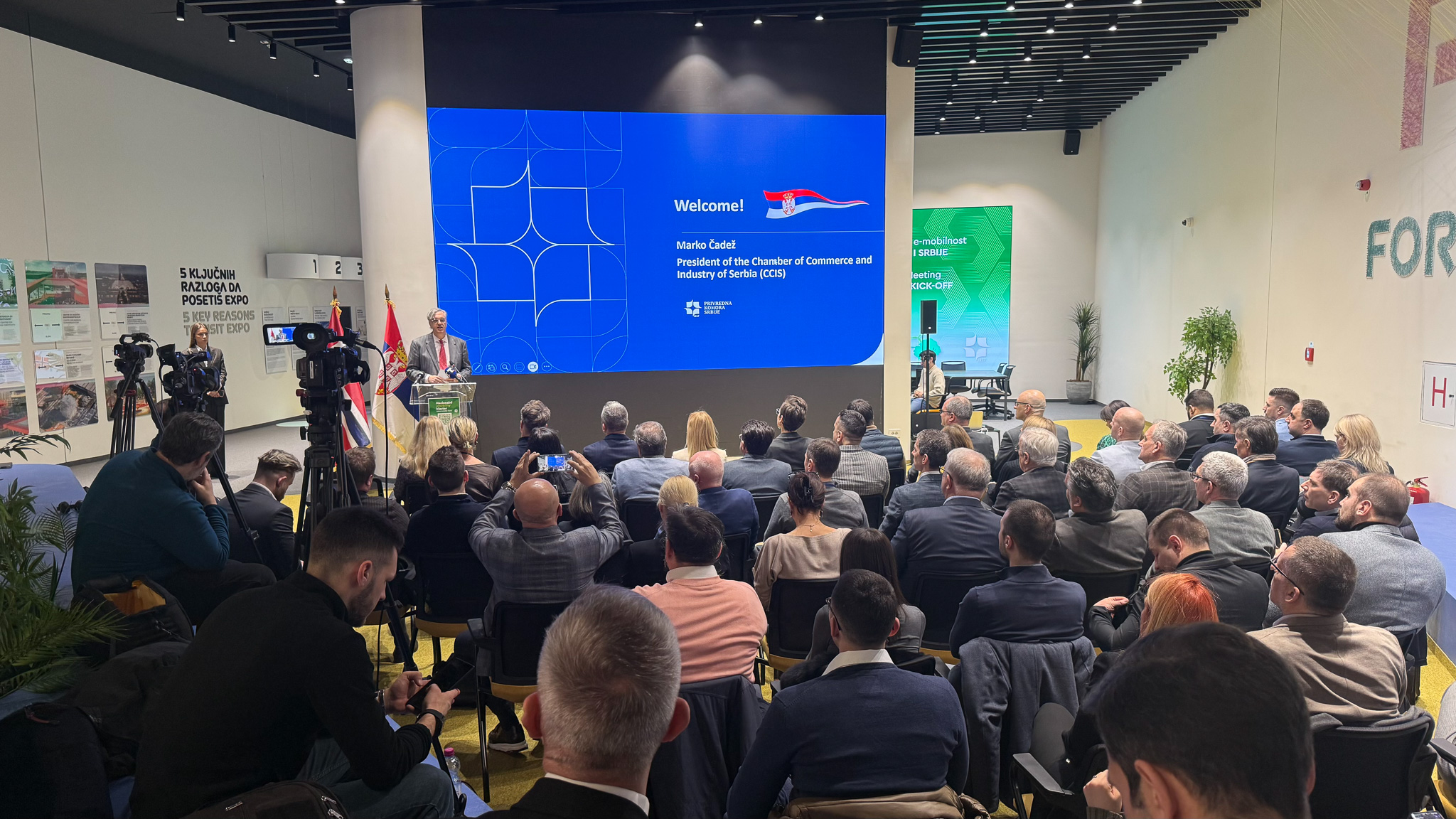
The Chamber of Commerce and Industry of Serbia (CCIS) is launching an initiative to develop a national e-mobility strategy, a key document for the transition to electric mobility, Marko Čadež, President of CCIS, stated today at the 5th session of the National e-Mobility Cluster, held at the “Playground” in Hall 5 of Belgrade Fair.
Čadež emphasized that e-mobility goes far beyond transport and environmental issues, highlighting that it is also a matter of energy, industry, infrastructure, investment, and geopolitics.
“Today’s gathering is particularly important for us as it takes place at a moment when the Chamber of Commerce of Serbia is launching an initiative for the adoption of a national strategy that will guide the transition to e-mobility and address the key issues of this process,” Čadež said.
He announced that, as part of preparations for the upcoming meeting of the Center for Economic Initiatives and Rapid Solutions—coordinated by CCIS, bringing together ministers, relevant institutions, and business actors—the initiative to develop this strategic document will be officially launched.
According to him, the first step for a successful transition to e-mobility is the existence of a national strategy that unifies goals, measures, responsibilities, and timelines, clearly defining coordination among all stakeholders. He noted that the experiences of developed European countries, including Norway, confirm this approach.
Čadež highlighted that for Serbia, the transition to e-mobility is part of a broader energy, industrial, and digital transformation, a top-priority national development project. He added that e-mobility brings benefits ranging from environmental protection and public health to technological innovation and new economic opportunities. The development of electric vehicles, he explained, fosters innovation in batteries, charging infrastructure, and related technologies, as well as advancements in energy storage and grid management sectors.
“Transitioning from conventional to electric mobility opens new business opportunities, new enterprises, new jobs, and space for research and development,” Čadež stated.
The national e-Mobility Cluster hosted international partners from the Kingdom of Norway, a global leader in the successful electrification of transport infrastructure and vehicles, as well as the integration of renewable energy sources into the mobility sector.
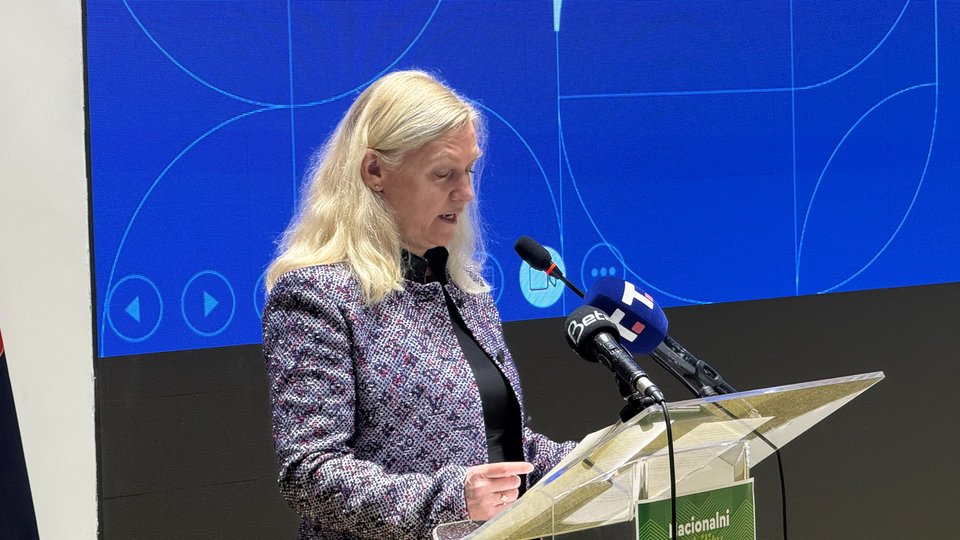
Kristin Melsom, Ambassador of the Kingdom of Norway to Serbia, emphasized that the goal of the gathering is to build business partnerships between Norwegian and Serbian companies, as well as companies from the Western Balkans region.
“I believe we have much to learn from Norwegian companies, but I also believe that Norwegian companies can learn a great deal from Serbian enterprises. Such collaboration is extremely important,” the Ambassador said, expressing hope that the meeting would open space for dialogue and serve as a venue for decision-makers and business ecosystem actors to connect.
The event showcased the potential for cooperation between Serbian and Norwegian companies and organized B2B meetings. The e-Mobility Cluster was recognized as a relevant platform for developing partnerships with Norwegian partners, who come to Serbia with a clear intent to establish cooperation within the e-mobility ecosystem.
LATEST NEWS
